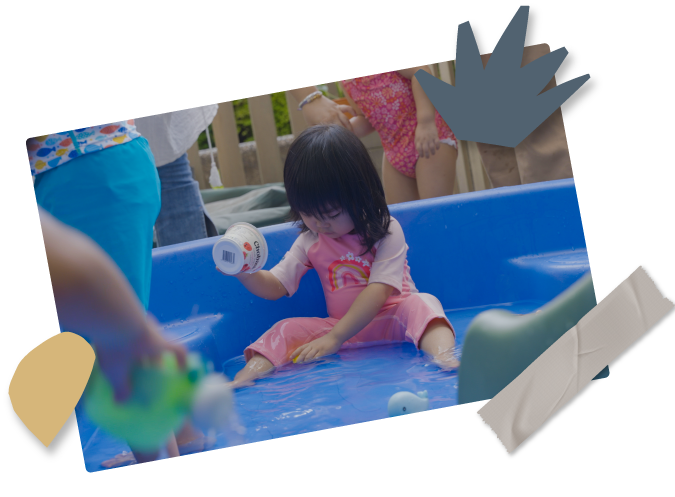
8 Play-Based Learning Activities You Can Try at Home for Your Preschooler
Play-Based Learning
Last updated on 2 April 2026
 百合谷幼儿园
Play-Based Learning
Last updated on 2 April 2026
Play-Based Learning
Last updated on 2 April 2026
Many parents want to try play-based learning at home, but aren’t sure how to get started. They may wonder how to facilitate it, for instance, or whether it’s meant to be free play.
If you’ve been wondering the same, the good news is that creating opportunities for play-based learning at home is possible and simpler than you may think! It is simply child-led, open-ended learning that focuses on the process rather than the final product, which parents can support in various ways.
The key is to remember that in play-based learning activities, there’s usually no right answer or set-in-stone process for the child to follow. In this guide, we show how to get started with play-based learning activities you can try at home.
Sensory play builds brain connections, language, and early scientific thinking. Here are some home learning activities for preschoolers that help develop those early on.

What you need: Cornstarch and water at a 2:1 ratio
Benefits: Early scientific reasoning, fine motor development, descriptive vocabulary
Oobleck is a mixture of cornstarch and water that provides children with an introduction to non-Newtonian fluid. It behaves like both a solid and a liquid, which helps children observe how materials can change depending on how they are handled.
It’s a marvellous way to provide textural and sensory input for a child during learning. Try prompting them to describe it with queries about what happens if they press on it quickly or when it feels solid or liquid. Let your child share observations with you.
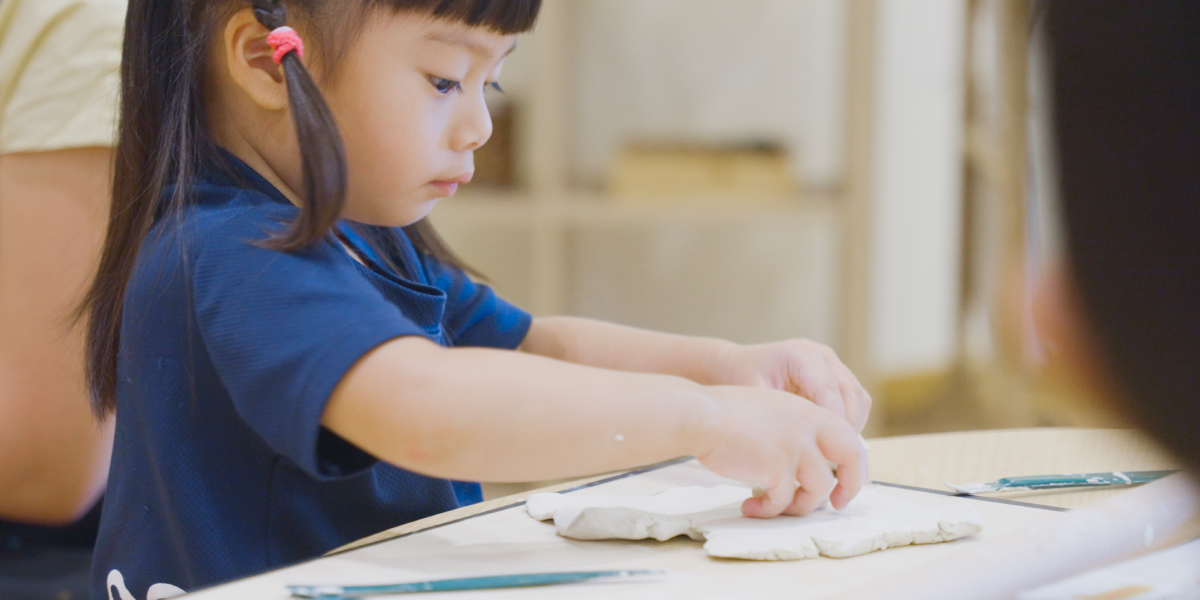
What you need: Homemade or store-bought playdough
Benefits: Expressing creativity, strengthening fine motor skills
This is one of the classic play-based activities for young children. At Lily Valley Preschool, we see children doing it all the time at our Art Atelier, sculpting animals and other shapes out of dough.
Let your child’s imagination run wild or encourage them to explore the replication of forms they’ve seen. It can be an excellent way to train their fingers to be more dexterous while encouraging creativity.
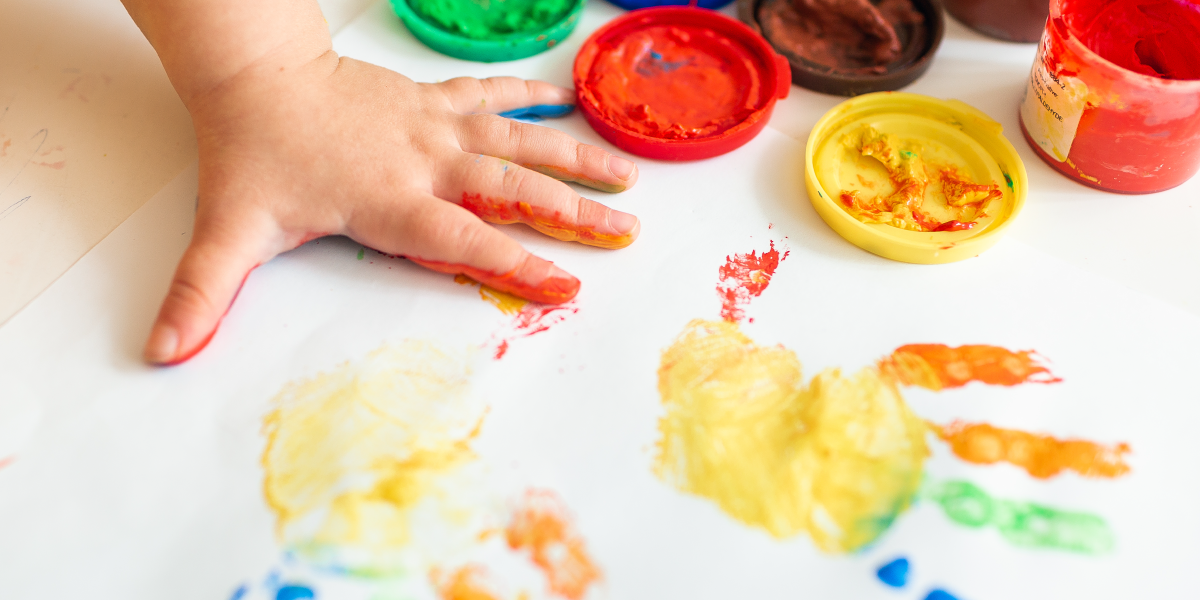
What you need: Paints and any canvas or paper you have available
Benefits: Creativity, sensory integration, and confident self-expression
The focus here is on process, not on the end product. Let your child explore things like mixing colours, the textures of the paints, and simple self-expression.
You may even ask your child to share what they’re painting with you. That way, they can also hone their descriptive and communication skills.
Young children have a lot of curiosity and are natural scientists. The activities below can encourage their abilities to question, observe, and predict or form hypotheses.
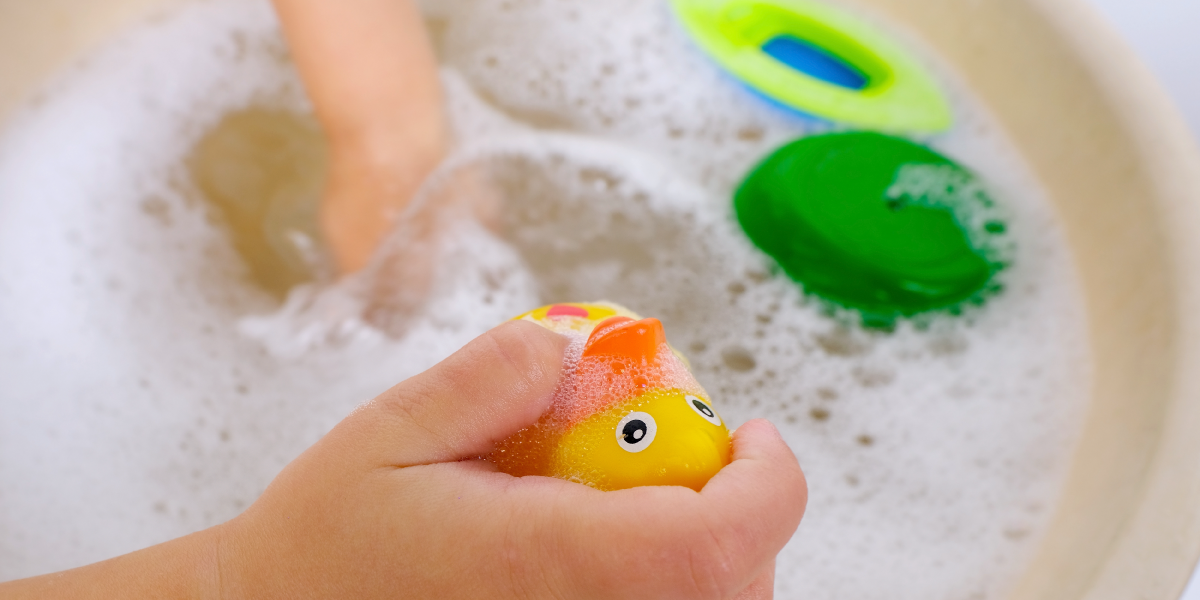
What you need: A basin of water and random household objects (try to pick a mix of ones that will sink and float, as well as ones that can’t injure your child)
Benefits: Logical thinking, hypothesis building, vocabulary
This is a fun way to explore which items sink and which float. Your child can learn prediction-making as each item is lowered into the basin of water.
During the activity, try asking your child why they think something might sink or float. This can later lead to simple discussions about ideas such as weight, buoyancy, or density.

What you need: Magnets and mixed materials that your child can hold the magnet against
Benefits: Observation skills, classification, and early scientific understanding
Let your child hold the magnet against different things, including against random household items. The idea is to let your child explore what sticks to the magnet and what doesn’t.
Your child can then try to classify or sort the items based on which ones are magnetic and which aren’t. Once you feel your child is ready, you can use this as a jump-off point for explaining the scientific concept of magnetism.

What you need: A simple torch or light source and a darkened room
Benefits: Spatial reasoning, scientific curiosity, creativity with shadow play
Let your child explore shadow play. They can make shadow puppets using their hands or toys, for example.
At Lily Valley’s own Light Atelier, children use this type of play to explore how shadows are created and how they change in size or shape depending on movement and the position of the object or light source.
It’s a way for them to use different tools to construct hypotheses and theories about light and shadow. At the same time, it stimulates creativity in younger learners.
Some play-based learning activities may unfold over days or even weeks. These are often activities suited to slightly older preschoolers, like the one below.
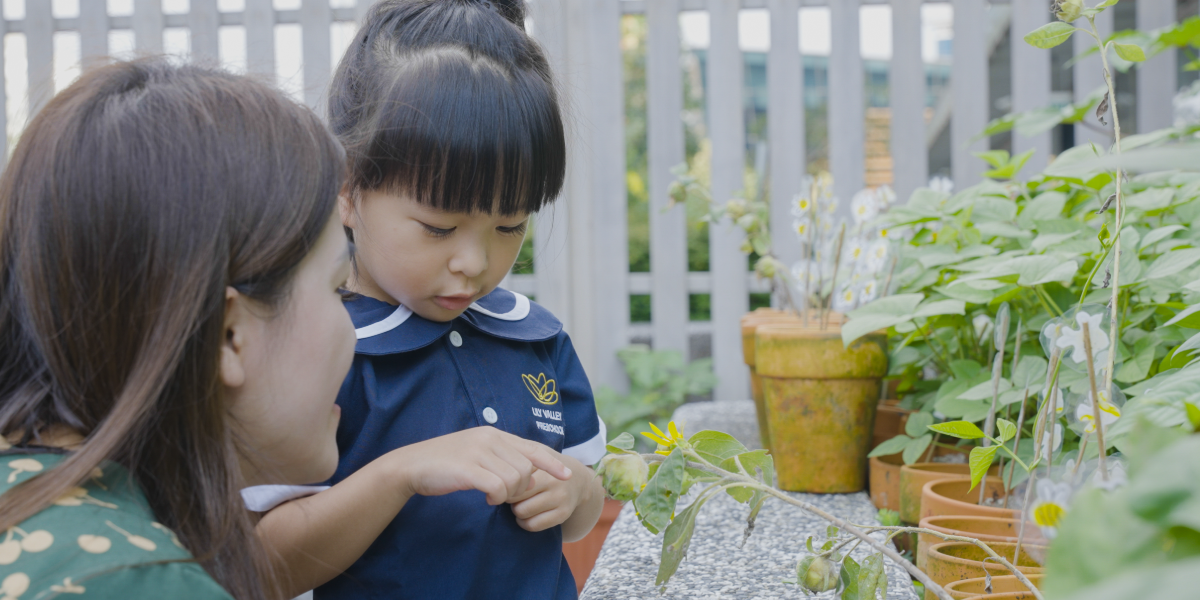
What you need: Seeds and soil, or green beans and cotton wool
Benefits: Scientific observation, connection to nature, and patience
This is a way for children to explore how plants grow over time. It also lets them build observation skills while giving them a sense of responsibility and training them in patience.
You can even get them to start a plant journal, where they document their daily observations through a visual journal or drawings of what they see in plant growth every day.
At Lily Valley, this same learning experience takes place in our outdoor edible garden. Children grow plants, including edible ones that may be used in our kitchens as part of their meals. In turn, they get a genuine sense of accomplishment and responsibility for what they cared for and consumed!
We know it’s sometimes difficult not to feel compelled to take over and demonstrate each activity for your child.
Parents can support their child’s learning by doing the following:
Play-based activities can have a host of advantages for young learners. Among other things, they link learning closely with enjoyment, helping children develop a love for learning from the start. It’s one of the biggest benefits of this approach, as we’ve seen in our own children at Lily Valley.
These activities also unlock your child’s potential by giving them organic opportunities to develop skills and make discoveries in ways that strict traditional approaches don’t. All of this contributes to your child’s natural growth.
As you’ve seen from this guide, you don’t need to have expensive materials or set-ups to engage in play-based learning activities with your child at home.
As long as children remain curious, they can learn deeply. Experience how this approach is applied daily at our various learning ateliers in Lily Valley. Book a school tour today!