The Role of Sensory Play in Early Childhood Learning
Sensory Play
Last updated on 14 August 2026
 Lily Valley Preschool
Sensory Play
Last updated on 14 August 2026
Sensory Play
Last updated on 14 August 2026
Many Singaporean parents picture finger painting or messy play with sand and water when someone mentions “sensory play”. But it actually goes far beyond those.
Sensory play for preschoolers can be a deliberate activity used to support a child’s learning. Quality preschool programmes weave it into a child’s day instead of treating each instance as a one-off activity.
This aligns with the Ministry of Education’s Nurturing Early Learners (NEL) framework. It emphasises purposeful play and active learning for children in the early years.
Sensory play is any activity that engages one or more of a child’s senses. That may mean touch, sight, hearing, smell, or even taste.
And contrary to what people may think, it’s not always messy! Music and art are sensory play activities too.
What makes it distinct is that it’s usually open-ended. There’s no single “correct” outcome for a child to aim for when participating in sensory play.
Instead, children are encouraged to investigate and experiment during the activity at their own pace. They can make discoveries and build confidence in individual ways as they go.
The benefits of sensory play are well-documented. They span cognitive, language, motor, and even emotional development.
Regular sensory experiences also help children build their vocabularies, refine fine and gross motor skills, and develop the focus and self-regulation they need for primary school.
We’ve covered these in more depth in our article on the benefits of sensory play for preschoolers. Beyond these developmental gains, though, sensory play also works as a genuine teaching tool.
Play-based preschools often use sensory play to deepen learning across the whole curriculum. Here’s how that plays out.
Through hands-on sensory exploration, children can observe, compare, predict, experiment, and test their ideas through hands-on experiences. That builds the blocks of scientific thinking.
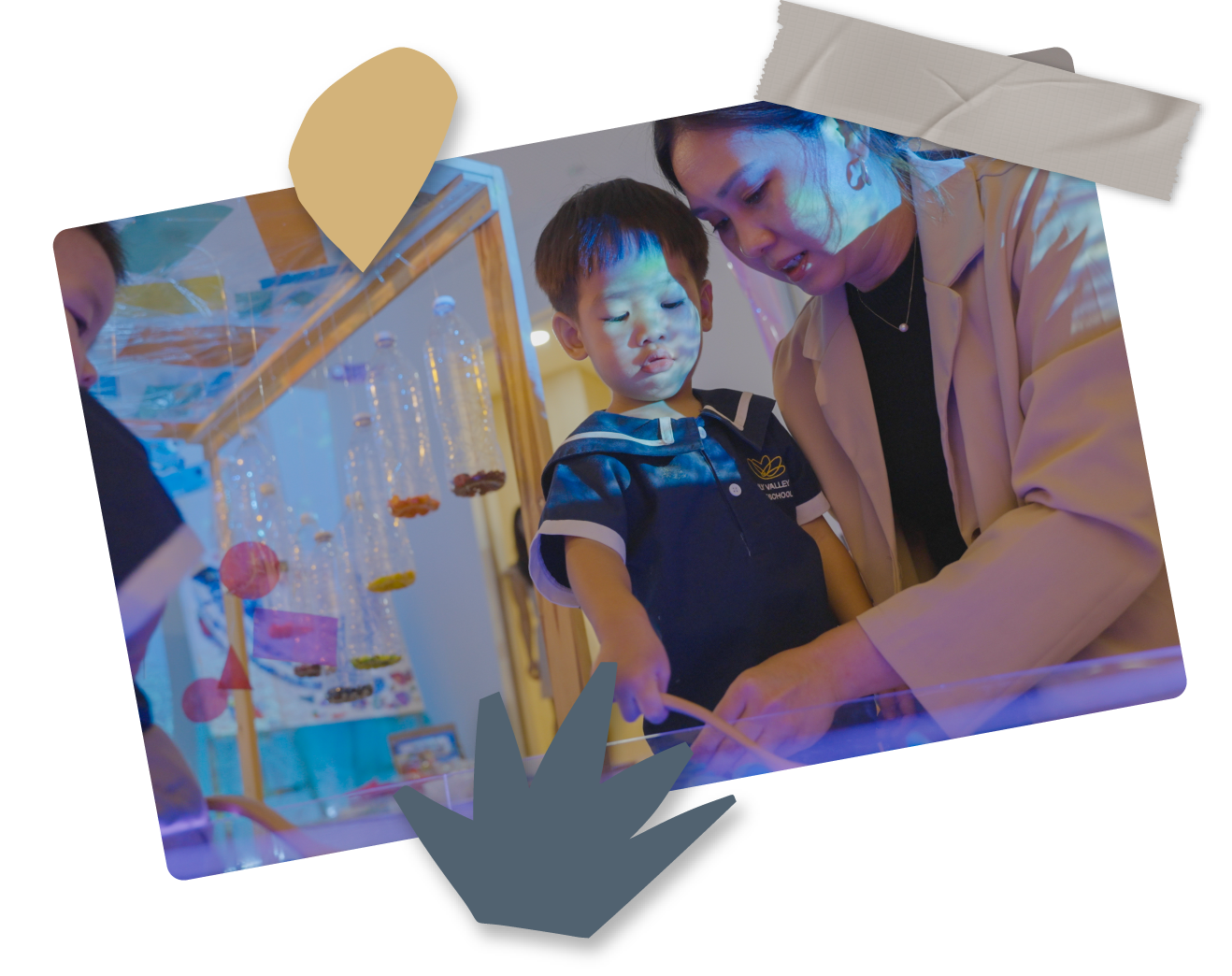
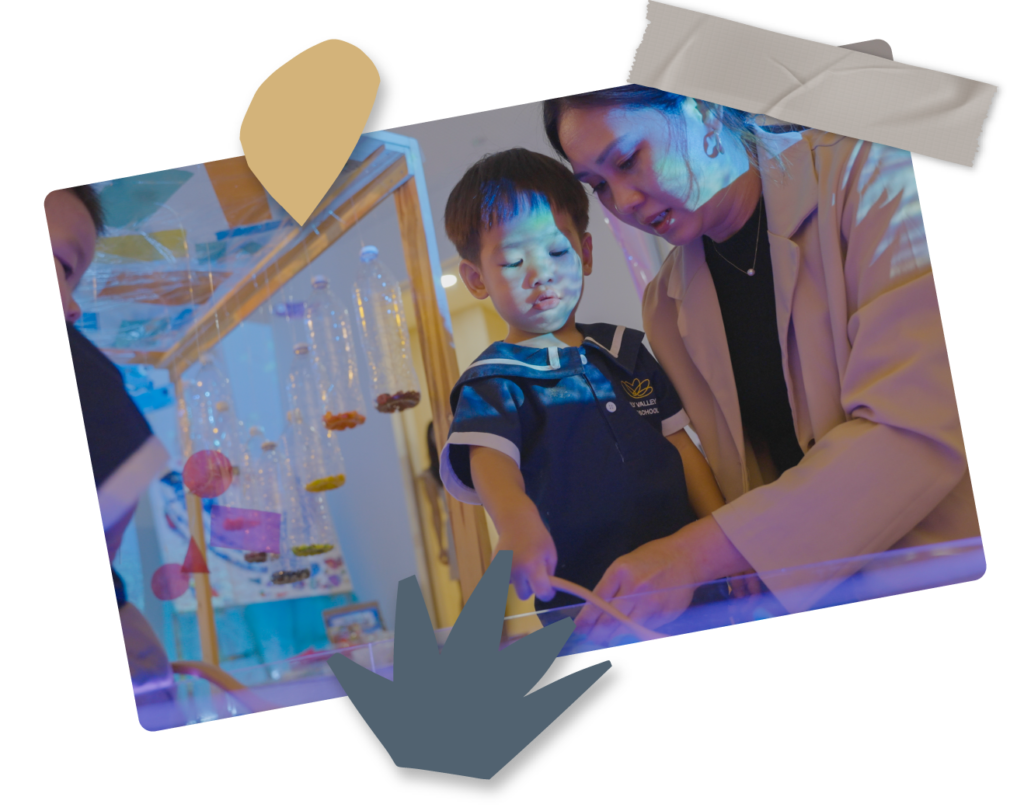
At Lily Valley, this comes alive in spaces like the Light Atelier, where children experiment with projectors and shadow. There, they form their own theories about how light behaves.
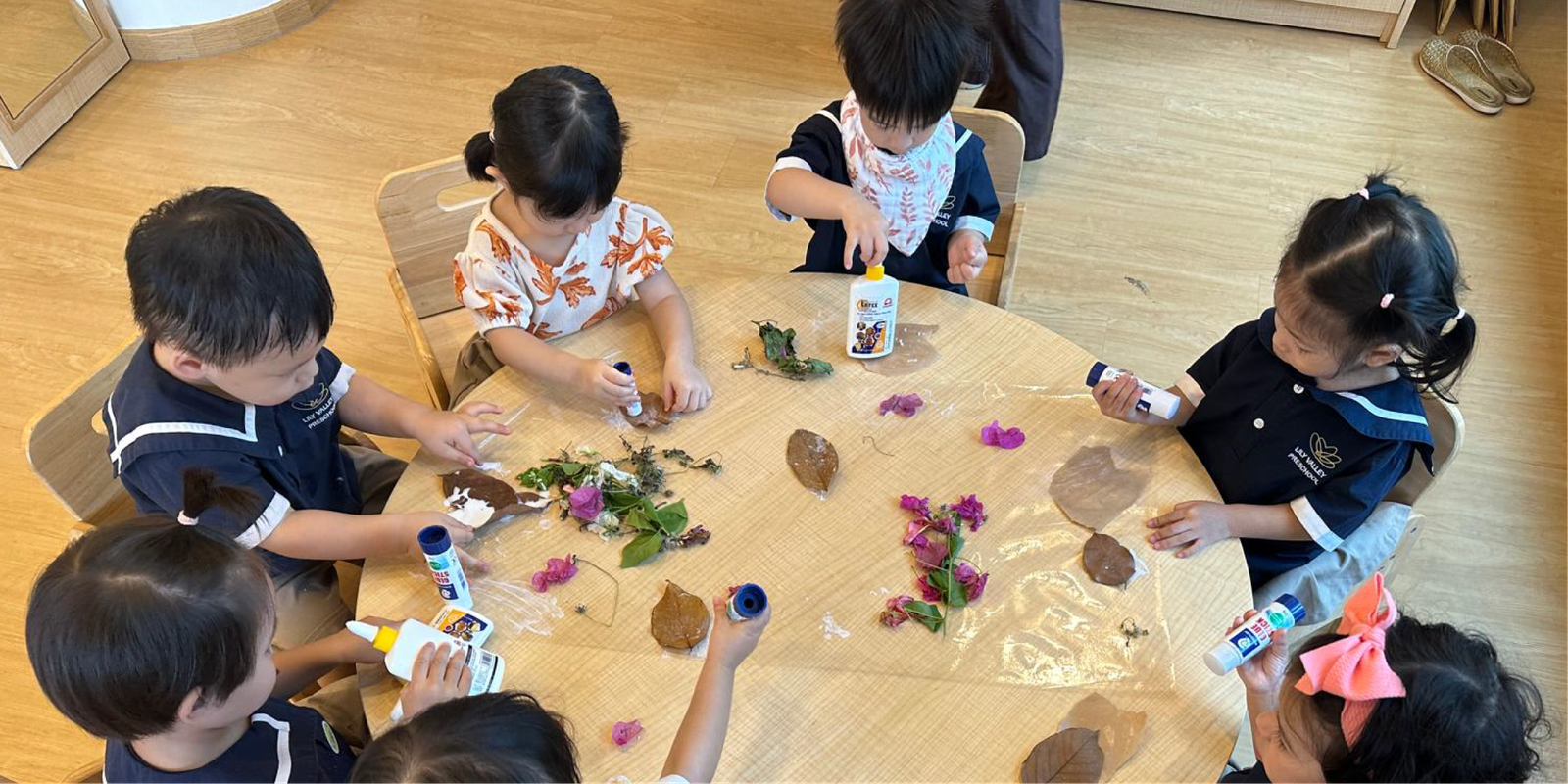
Different materials, textures, and artistic media allow children to express ideas in multiple ways. Best of all, this offers the option to perform that expression without pressure to produce a “perfect” result.
In our own Art Atelier, children experiment with clay, paint, and mixed materials. They exercise their creativity and also discover new ways to communicate with others.
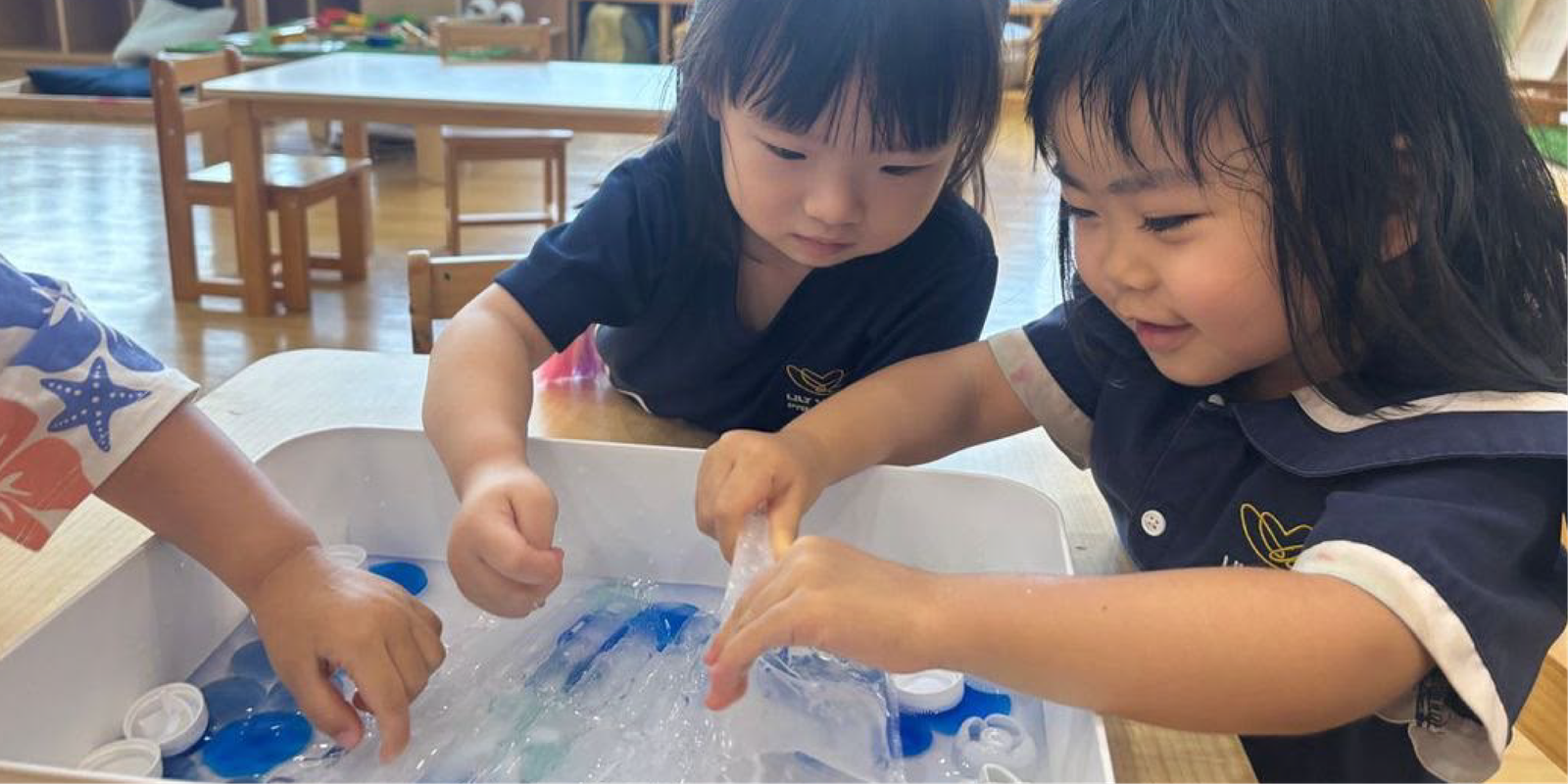
Sensory experiences naturally prompt children to describe what they see, feel, hear, and discover. Teachers can also extend children’s vocabulary through open-ended questions and conversations during play, encouraging children to share observations with their peers.
Gardening and outdoor sensory activities help children connect with nature, understanding where food comes from and how living things grow.
At Lily Valley, children take part in seasonal planting, watering, and harvesting in our Edible Garden. There, they learn a sense of responsibility for something they’re growing themselves.
Activities like cooking introduce children to textures, smells, tastes, sequencing, and measuring. They also build independence and practical problem-solving.
For example, children get to explore food preparation with our school chef in our Kitchen Atelier. They also learn about ingredients, healthy eating, and food culture.
Meaningful sensory learning depends on more than activities. The environment itself matters just as much.
Effective preschool spaces offer a variety of materials and textures, dedicated indoor and outdoor learning areas, natural elements such as gardens and water, and open-ended resources. All of it invites experimentation.
At Lily Valley, this is reflected in our specialised ateliers and spaces. Each is designed around what Reggio Emilia educators call “the environment as the third teacher”.
This is the idea that a thoughtfully designed space teaches alongside parents and educators. Every space is arranged to support a different kind of sensory experience throughout the preschool day.
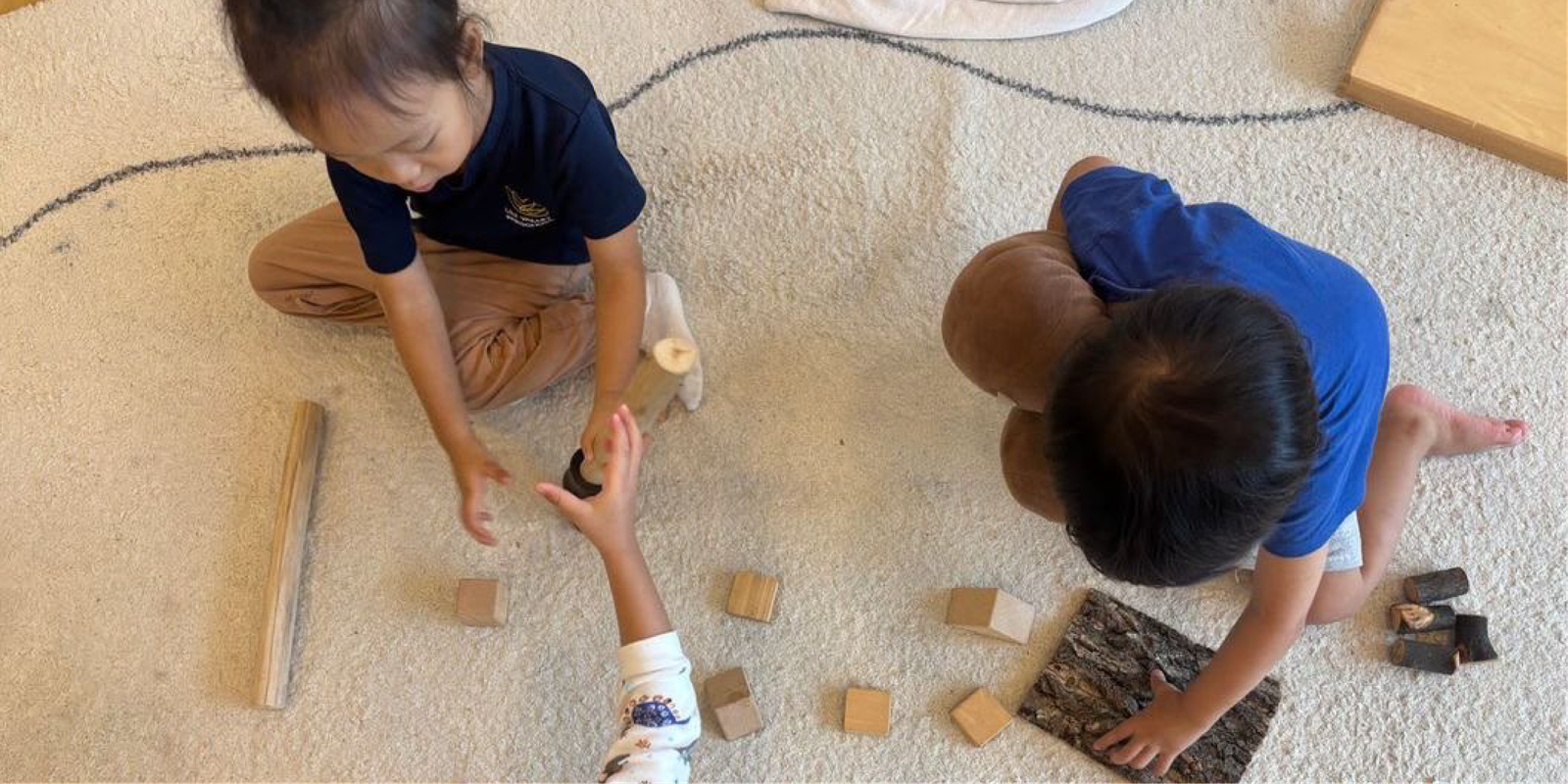
Sensory play is most effective when it’s consistently embedded throughout the preschool curriculum rather than treated as an occasional activity.
Daily opportunities for exploration allow children to revisit ideas, deepen their understanding, and build confidence over time.
In play-based, Reggio Emilia-inspired environments, it’s naturally woven into things like art and inquiry projects. It’s even seen in outdoor exploration and gardening.
Educators play a key role here too, but not by directing every activity. Instead, they observe children’s interests and extend their learning through open-ended questions and conversation.
Sensory play is much more than messy fun. It’s a valuable way for children to explore, communicate, create, and discover.
Rather than looking at individual activities alone, it’s worth considering how intentionally a preschool designs its overall learning environment to support this kind of exploration every day.
At Lily Valley, sensory learning comes to life through our play-based Reggio Emilia-inspired curriculum paired with our specialised learning ateliers and outdoor spaces. Book a school tour to see how it all comes together for your child!